AI Agent Development for Business in Indonesia
Have a recurring workflow that takes too much of your team's time? I work with Infused to scope and build an agent around it, with clear limits, human review, and tests that reflect the actual work. We start with one useful workflow.
(THE HONEST VERSION)
Agents are powerful and unreliable. Both are true.
Useful agents need a clearly bounded job, suitable data, and someone responsible for checking the output. Before a build, we agree on what the agent may do, what requires approval, and what happens when information is missing or a tool fails.
I start with one narrow workflow. We test it against representative inputs and failure cases, then decide whether it is ready for wider use. Human review stays in place wherever an incorrect action would matter.
(WHAT GOOD LOOKS LIKE)
How I build agents that hold up
- Finding the one workflow where an agent actually earns its keep, before writing any code
- System prompting, tool use, and integration with the tools your team already runs
- Guardrails, hard execution limits, and audit logs, so an autonomous agent can't go rogue
- Human-in-the-loop on the consequential steps (money, customer promises, data changes)
- Measuring reliability across many runs, not one clean demo, and watching cost-per-task
- Knowing when an agent is the wrong tool, and a simpler automation wins
(WHERE THEY EARN THEIR KEEP)
Good first use cases
- Customer questions on the channels you already use (WhatsApp, email)
- Document-heavy back-office work: intake, summarising, routing
- Internal knowledge assistants over your own docs and data
- Repetitive research and data gathering with a human approving the output
- Workflow automation that stitches your existing tools together
(LEARN THE PILLAR)
Start here on AI agents
The writing I keep coming back to when teams ask where to begin. Practitioner notes, anti-hype, grounded in real builds.
AI Agent untuk Bisnis: Panduan Praktis untuk Pemimpin Non-Teknis
The plain-language starting point: what an agent is, where it fits, and how to begin.
June 15, 2026 · 11 min read
Kenapa Demo AI Agent Mulus, Tapi di Kantor Sering Gagal
Why demos mislead, grounded in 2026 reliability research, and how to deploy anyway.
June 16, 2026 · 7 min read
Biaya AI Agent: Build, Operasional, dan Scope yang Perlu Jelas
Two costs, not one. The recurring one decides whether the project survives month six.
August 7, 2026 · 5 min read
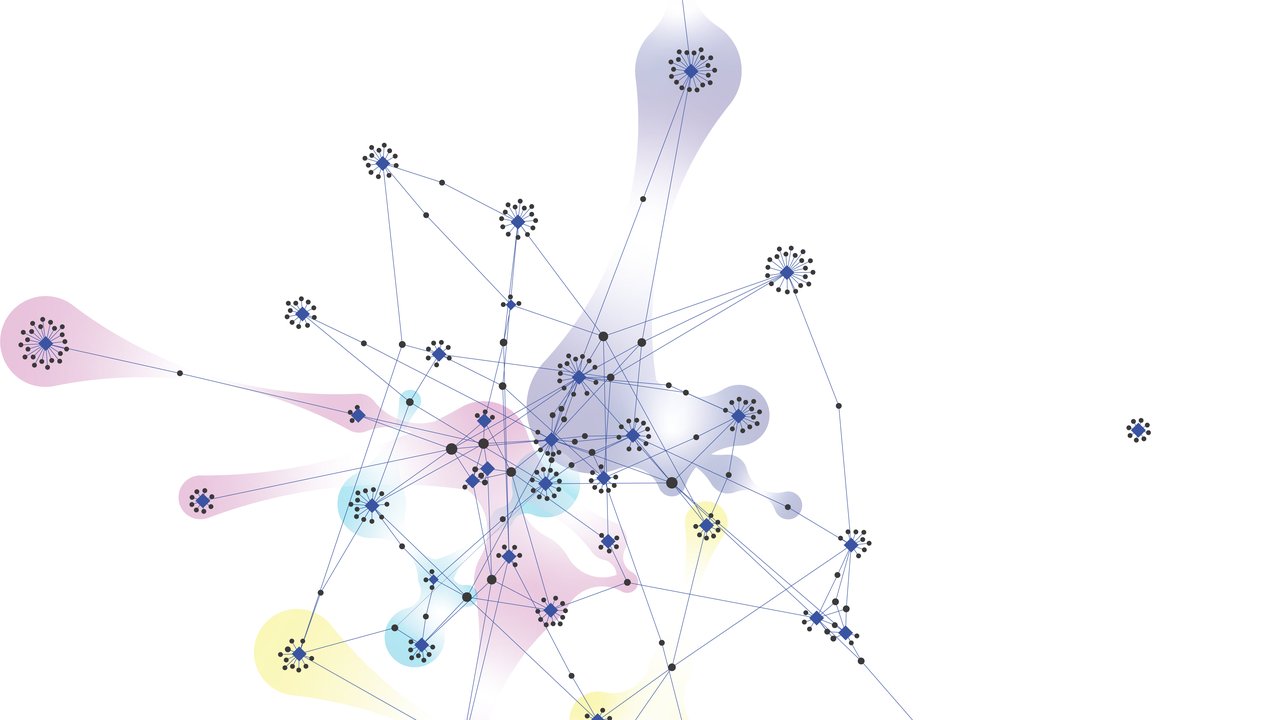
State of AI Agents di 2026. Yang Perlu Kamu Pahami Sekarang.
Where the technology actually is right now, and what it means for your business.
March 14, 2026 · 10 min read
(Free interactive course)
Agent Academy: building AI agents in 2026
A free, self-paced course. 26 modules across 7 zones, from first principles to reliable, production-grade agents. Concepts and diagrams first, real code when you want it, plus a cost calculator, a production-readiness checklist, and a "should I build an agent?" decision tool.
Halaman Bahasa Indonesia: AI Agent Indonesia
(THE OTHER TWO PILLARS)
(Compare)
Agent, chatbot, or plain automation
These three get used interchangeably in meetings, and they differ in cost, risk, and the kind of work they suit. Picking the cheapest one that solves your problem is usually correct.
| What it does | Best for | Cost to run and maintain | Main risk | |
|---|---|---|---|---|
| Rule-based automation | Runs fixed steps you defined | Predictable work where the path never varies | Lowest, and rarely surprises you | Breaks silently when the process changes |
| Chatbot | Responds in conversation | Answering questions, triage, front-line support | Low to moderate | Says something wrong. Embarrassing, recoverable. |
| AI agent | Decides its own steps toward a goal | Work where the path genuinely varies each run | Highest, and ongoing. Cost per task plus an owner. | Does something wrong. The email is already sent. |
If the steps are fixed and the decision points are predictable, an agent is the expensive answer to a cheap problem. A large share of agent requests are better served by automation.
(FAQ)
Frequently asked questions
What is an AI agent, in business terms?+
An AI agent is software that does not just answer questions, it takes actions toward a goal: it can read data, use tools, and complete multi-step tasks with limited supervision.
The power is that it acts. The risk is also that it acts, which is why scope, guardrails, and oversight matter far more than raw model intelligence. A chatbot that says something wrong is embarrassing. An agent that does something wrong has already sent the email, updated the record, or issued the refund. That difference is the whole design problem.
Do I actually need an agent, or would simple automation do?+
Often simple automation would do, and it is worth checking before anyone builds anything.
The test is whether the work needs judgement. If the steps are fixed and the decision points are predictable, a rule-based automation runs it more cheaply, more predictably, and with far less to maintain. An agent earns its cost only when the path genuinely varies run to run. A large share of requests that arrive as "we need an AI agent" are better served by an if-then workflow that ships in days. Abi will say so.
Are AI agents reliable enough to use in a real company?+
For narrow, well-defined tasks with guardrails and human checkpoints, yes. For broad, open-ended autonomy, not yet: 2026 benchmarks like Scale's Remote Labor Index show even the best agents complete only a small fraction of full real-world projects unaided.
The skill is designing around that rather than pretending it away. That means hard execution limits, audit logs, and a human approving anything touching money, customer promises, or data changes. Reliability in production comes from the constraints around the model far more than from the model itself.
How do you start with AI agents without wasting money?+
Start from one real, repetitive, lower-risk workflow, not from a tool. Prove it works on your own data, measured across many runs, with a clear definition of success and a cost-per-task you can live with.
The failure pattern is well documented. MIT Media Lab's NANDA study found roughly 60% of organisations evaluate an AI tool, 20% reach a pilot, and 5% reach production. Almost all of that loss happens because the pilot was picked for how impressive it looked rather than for how expensive the work actually was. Expand only after the first one earns its place.
Build in-house or hire someone to build it?+
Both can work, and the honest answer depends on three things: whether the workflow is core to your business, how sensitive the data is, and whether you have anyone who can maintain it after launch.
That third one decides more projects than people expect. An agent is not a delivery, it is a system that needs an owner. Infused builds production agents for clients and also helps teams build their own, with the integration, guardrails, and audit trails enterprises need. The fastest way to know which fits is to talk through your specific case.
Who builds AI agents for business in Indonesia?+
Abi Mangku builds AI agents for Indonesian businesses through Infused, the AI development company he co-founded. The focus is agents that run in production and do real work, with the guardrails and human oversight a real company needs.
His perspective is business-first rather than technical, which mostly shows up as a willingness to scope things down. He also trains company teams through Latih AI, including Tempo Scan Group, Ajaib, and Astra Life, so the builds and the team capability to run them come from the same place.
Siapa yang bisa membangun AI agent untuk bisnis di Indonesia?+
Abi Mangku lewat Infused membangun AI agent yang benar benar dipakai di production untuk bisnis Indonesia. Fokusnya bukan demo, tapi agent yang menyelesaikan pekerjaan nyata dengan guardrails dan pengawasan manusia yang masuk akal.
Sudut pandangnya bisnis, bukan teknis, dan itu biasanya terlihat dari kesediaannya mengecilkan scope. Kalau ternyata masalahnya cukup diselesaikan automation biasa, dia akan bilang begitu, karena agent yang tidak perlu itu mahal di biaya build sekaligus mahal di perawatan.
Got a workflow an agent could own?
Tell me the task you're thinking about. I'll tell you honestly whether an agent fits, how I'd build it safely, and whether it's even worth it yet.